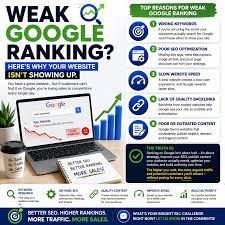
Most SEO advice is content-focused: write more articles, get backlinks, use keywords. That layer matters. But beneath it is a technical foundation — how the site is engineered — that determines whether Google can find, understand and rank your content in the first place. This is what developers do that designers and content teams often miss entirely.
Semantic HTML Structure
A page's heading hierarchy — H1, H2, H3 — is not just visual organisation. It is a semantic map that Google's crawler uses to understand your content's topics and subtopics. A single H1 per page containing your primary keyword, followed by H2s for main sections and H3s for subsections, is a foundational ranking signal.
Many designer-led builds use heading tags for visual sizing rather than semantic purpose — H3 because it looks like the right size — and this breaks the content map Google reads.
Core Web Vitals as a Ranking Factor
Google officially uses Core Web Vitals — Largest Contentful Paint (LCP), Cumulative Layout Shift (CLS) and Interaction to Next Paint (INP) — as ranking signals. A site that is visually beautiful but scores 45 on mobile PageSpeed will rank below a simpler site that scores 90.
Achieving high scores requires engineering decisions: image format choices (WebP/AVIF), lazy loading below-the-fold images, preloading hero images, eliminating layout shifts from late-loading fonts or ads, and minimising render-blocking JavaScript.
Structured Data and Schema Markup
Schema markup is JSON-LD code added to a page that tells Google explicitly what type of content it contains — a local business, a product, an article, a FAQ, a person. Schema-enriched pages qualify for rich results in Google Search: star ratings, FAQ dropdowns, breadcrumb trails and knowledge panel entries.
This is pure code work with zero visual impact on the page, which is why designers often do not include it in their deliverables. For a local Pakistani business, LocalBusiness schema alone can dramatically improve how your listing appears in Google Maps and local searches.
Canonical URLs and Duplicate Content Prevention
Without explicit canonicalisation, a single page can be indexed under multiple URLs — with and without trailing slashes, HTTP and HTTPS variants, www and non-www — causing duplicate content penalties. Proper canonical tags, consistent internal linking and server-level redirects eliminate this silently.
Server-Side Rendering vs Client-Side Rendering
Single-page applications built with React or Vue that render entirely in the browser can be partially invisible to Google's crawler. Server-side rendering (Next.js, Nuxt) or static site generation ensures every page's full content is available in the HTML that Google fetches — not dependent on JavaScript execution.
For a portfolio or business website, this is the single most impactful architectural decision for SEO.
Internal Linking Architecture
Google distributes ranking authority through internal links. A site where every page is reachable within two clicks from the homepage passes authority efficiently. Pages buried four levels deep or orphaned without any inbound links receive minimal authority and rank accordingly.
Building a deliberate internal linking strategy — cross-linking services to related blog articles, linking blog articles to relevant service pages — is an engineering and content decision that compounds over time.
Conclusion
SEO-friendly design is not a checklist you apply after launch. It is a set of architectural decisions made from the first line of code. Retrofitting technical SEO onto a poorly structured site costs more than building it correctly from the start.
Every site I build includes technical SEO foundations as standard: semantic HTML, schema markup, Core Web Vitals optimisation, canonical URLs and server-side rendering where appropriate. If you want a site Google can actually rank, let us talk.
Want help with your project?
I build fast, modern and SEO-ready websites. Let's talk about what you need — I usually respond within a few hours.
Get in Touch →
Malik Kashan
Frontend & WordPress Developer · Lahore, Pakistan
I build fast, SEO-ready websites for startups and businesses worldwide using Next.js, React and WordPress.
Hire Me for Your Project