Your portfolio is simultaneously your best marketing asset and your most visible technical sample. For a frontend developer, it is the one project where you have complete creative and architectural control — and recruiters know it. Here is how to build one that actually converts interest into interviews.
Why Next.js Over Plain React or Static HTML
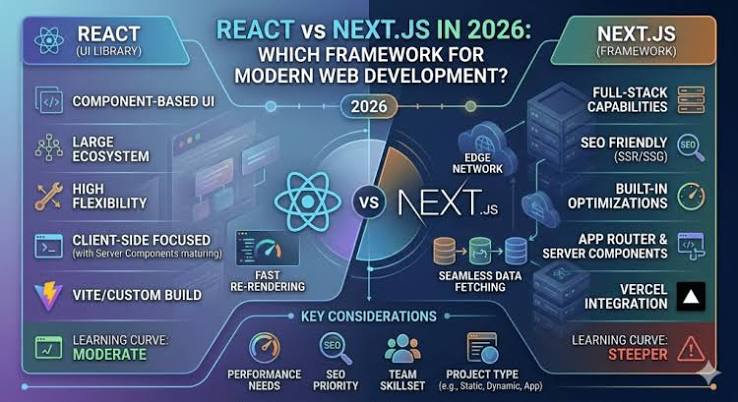
Next.js gives a portfolio site three things that plain React cannot: server-side rendering for full Google indexability, file-based routing for clean URLs without configuration, and built-in image optimisation that keeps your project screenshots fast.
Static HTML portfolios are fast but do not demonstrate modern framework proficiency. Plain React SPAs are harder to index. Next.js hits the intersection of performance, SEO and technical signalling that senior hiring managers notice.
The Sections That Actually Matter
Hero with a clear value proposition — not just your name and title, but what you specifically deliver and for whom. Projects section with live links, tech stack labels and a one-sentence outcome per project. Skills section showing depth, not just a logo grid. About section with your professional background and what makes you different. Contact section with a working form and your response time commitment.
Sections that waste space: elaborate loading animations, a 'hobbies' section, a music-player Easter egg, anything that does not help the reader decide whether to contact you.
Technical SEO for a Developer Portfolio
Your portfolio should rank for your name, your location plus 'developer', and the technologies you specialise in. This requires: an H1 containing your full name and primary skill, a meta description with your name, location and specialisation, a Person schema in JSON-LD, and fast enough Core Web Vitals to not be penalised.
Many developer portfolios score beautifully on Dribbble and score 35 on Google PageSpeed. Do not be that developer.
Project Presentation That Demonstrates Depth
Every project entry should answer: what was the problem, what did you build, what technology and why, and what was the measurable result? Screenshots are table stakes. Adding PageSpeed scores, client testimonials or traffic growth numbers turns a project card into evidence.
Two well-documented projects are more persuasive than eight screenshot thumbnails with no context.
Performance as the Silent Portfolio Piece
A portfolio that scores 95+ on Google PageSpeed Mobile communicates more about your engineering standards than any number of skill badges. It shows you eat your own cooking — you do not just claim to build fast sites, you built one.
Optimise your hero image as a preloaded WebP, defer non-critical JavaScript, use next/image for all project screenshots, and target LCP under 2.5 seconds on mobile.
Deploying on Vercel and Getting Indexed
Vercel is the natural deployment target for Next.js — it handles edge caching, image CDN and serverless functions with zero configuration. After deployment: submit your sitemap to Google Search Console, set up canonical URLs, and add your portfolio URL to your LinkedIn, GitHub and any developer directory you are listed on.
Google typically indexes a well-linked Next.js portfolio within 3–7 days of Search Console submission.
Conclusion
Your portfolio is a product. It has a user (a hiring manager or potential client), a goal (getting them to contact you) and measurable outcomes (response rate, interview conversion). Build it with that product mindset, not as a creative experiment.
This portfolio was built with Next.js 16, Tailwind CSS, deployed on Vercel, and scores 95+ on PageSpeed Mobile. If you want a portfolio built to the same standard, let us talk.
Want help with your project?
I build fast, modern and SEO-ready websites. Let's talk about what you need — I usually respond within a few hours.
Get in Touch →
Malik Kashan
Frontend & WordPress Developer · Lahore, Pakistan
I build fast, SEO-ready websites for startups and businesses worldwide using Next.js, React and WordPress.
Hire Me for Your Project